
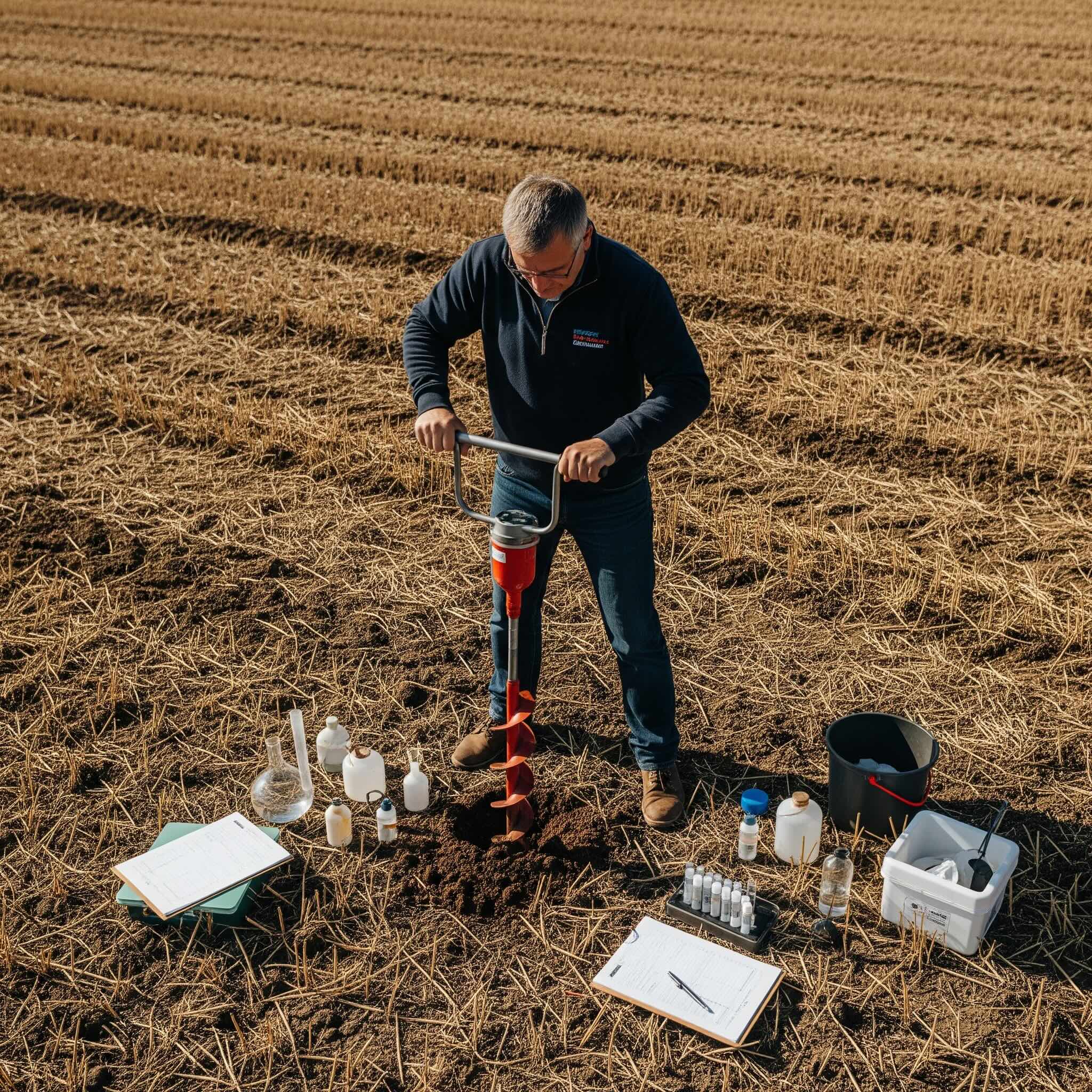
The cost of soil sampling is a familiar line item in any modern farming budget. Between the lab fees, shipping, and supplies, the direct expenses are clear. But what if the most significant financial drains aren’t the ones you see on the invoice? The reality for many large-scale farming operations and independent agronomists is that the hidden costs—time, labor, and inaccuracy—are far more damaging to profitability. These unseen expenses can quietly sabotage yields and inflate input costs, turning a routine agronomic practice into a significant financial liability.
The Obvious Costs We All See
Before diving into the hidden expenses, it’s important to acknowledge the direct costs that every agricultural professional knows well. These are the tangible, upfront investments required for traditional soil analysis:
- Soil Testing Lab Fees: Depending on the complexity of the analysis, these fees can range from basic pH and macronutrient tests to more comprehensive panels that include micronutrients and organic matter. For large fields requiring numerous samples, these fees quickly add up.
- Shipping Costs: Sending samples to a qualified lab, which may be located hundreds of miles away, incurs shipping and handling charges. Expedited shipping is often necessary to ensure sample integrity, further increasing the cost.
- Supplies and Equipment: The cost of soil probes, sample bags, and GPS equipment for marking sample locations, while not exorbitant, contributes to the overall expense of the process.
While these costs are easily quantifiable, they represent only a fraction of the true financial impact of traditional soil sampling methods.
The Hidden Costs That Truly Impact Your Bottom Line
The most significant financial burdens of traditional soil sampling are not the direct fees but the indirect consequences of an outdated process. These hidden costs affect everything from operational efficiency to final yield.
The Cost of Time & Delayed Decisions
One of the most significant hidden expenses is the prolonged time for soil analysis. After samples are collected and shipped, it can take several weeks to receive the results from the lab. This delay creates a critical information gap, forcing farmers and agronomists to make crucial decisions with outdated or incomplete data.
This waiting period often means missing the optimal window for fertilizer and nutrient application. Applying nutrients too early can lead to leaching and runoff, wasting expensive inputs and potentially causing environmental harm. Applying them too late can mean the crop doesn’t get what it needs during its most critical growth stages, leading to stunted development and reduced yield. These delayed decisions, forced by a slow and cumbersome process, directly translate to lost revenue.
The Cost of Labor & Inefficiency
The physical act of collecting soil samples is a labor-intensive and time-consuming endeavor. The grid sampling costs, when broken down, reveal a significant investment in man-hours and fuel. Skilled agronomists or farmhands spend countless hours traversing large fields, meticulously collecting samples according to a pre-defined grid.
This is time and expertise that could be allocated to higher-value tasks, such as analyzing yield data, scouting for pests and diseases, or developing more sophisticated crop management strategies. Instead, valuable team members are tied up in a manual process that is both physically demanding and operationally inefficient. The fuel and vehicle maintenance associated with driving across vast acreages further adds to these hidden operational costs.
The Cost of Inaccuracy
Perhaps the most damaging hidden cost is the inherent inaccuracy of traditional composite sampling methods. A standard soil test, which combines multiple cores from a large area into a single sample, provides an average nutrient reading for that entire zone. While this approach is better than no data at all, it fails to capture the significant nutrient variability that exists within a single field.
This averaging effect masks “hotspots” of high nutrient concentration and “cold spots” of deficiency. The result is a flat-rate fertilizer application that is almost guaranteed to be wrong for a significant portion of the field. This leads to two costly outcomes:
- Over-fertilizing: In areas where nutrient levels are already sufficient, applying more fertilizer is a waste of money and can lead to nutrient runoff.
- Under-fertilizing: In nutrient-deficient pockets, the crop is starved of essential nutrients, leading to lower yields and unrealized profit potential.
These soil sampling errors create a cycle of inefficiency, where expensive inputs are wasted, and yield potential is never fully achieved, all because the initial data was not granular enough to reflect the true conditions of the field.
Is There a Better Way? Re-evaluating the Data Collection Process
The frustrations of delayed results, high labor costs, and inaccurate data are driving a re-evaluation of the entire soil analysis paradigm. The core of the problem lies not with the laboratory analysis itself, but with the outdated method of data collection. This realization prompts some critical questions for forward-thinking agricultural professionals:
- What if you could get accurate soil data for your entire field instantly?
- What if you could see every high and low-nutrient corner of your fields without the manual labor and fuel costs of traditional sampling?
- What if you could make fertilizer application decisions with a level of precision that was previously unimaginable?
The future of profitable and sustainable agriculture lies in answering these questions. The next logical step in precision agriculture is the adoption of modern alternatives like remote sensing and satellite-based analysis. These technologies offer a path to overcoming the inherent limitations of physical soil sampling.
Conclusion
While the line-item expenses for lab tests are a known cost of soil sampling, the true financial burden lies in the hidden costs of time, labor, and inaccuracy. The weeks-long wait for results leads to delayed decisions and missed application windows. The manual labor of grid sampling represents a significant drain on time and resources. And the inherent inaccuracy of composite sampling leads to wasted fertilizer and unrealized yield potential. To remain competitive and sustainable, it is essential to look beyond the lab invoice and recognize that improving the data collection process itself is the key to unlocking future profitability.
Ready to eliminate the hidden costs of soil sampling? Discover how Siora.ai’s instant, remote soil analysis is changing the game for modern agriculture.